


 +86 18130251359
 teflowpumps@tlpumps.com

In precision manufacturing sectors such as electroplating, PCB circuit‑board manufacturing, and hardware surface treatment, plating‑part cleaning is a core process running through the entire production cycle, which directly determines coating flatness, adhesion and finished‑product qualification rate. After workpieces undergo electroplating, passivation, polishing, etching and other processes, their surfaces retain large amounts of acidic chemicals, alkaline additives, heavy‑metal ions, complexing agents and surfactants. The wastewater generated by subsequent multi‑stage water washing features complex composition and strong corrosiveness with special medium properties. It imposes stringent requirements on the corrosion resistance, sealing performance and operational stability of conveying equipment.
Three Major Challenges in Conveying Plating‑Part Cleaning Wastewater
Challenge 1: Complex Water‑Quality Composition
Plating‑part cleaning wastewater is composite corrosive wastewater rather than single acid‑alkali water. Its composition changes dynamically with plating types and production procedures. The wastewater contains residues of strong acids including sulfuric acid, hydrochloric acid, nitric acid and chromic acid, as well as multiple heavy‑metal ions such as copper, nickel, chromium, zinc and tin. It is also mixed with organic additives including degreasers, brighteners, complexing agents and surfactants. The composite corrosion system formed by mixed multiple media exerts severe erosion on metal pump bodies. Some heavy‑metal complex ions possess special chemical activity, which accelerates aging and embrittlement of ordinary plastic pump bodies.
Challenge 2: High Content of Fine Impurities
During plating‑part cleaning, fine impurities continuously mix into wastewater, including micro‑particles of detached coating from workpiece surfaces, flocculent particles of metal hydroxides, precipitates from chemical reactions and oil‑bearing suspended solids, giving the wastewater slight solid‑containing characteristics. These impurities are fine‑grained and delicate. They will not cause large‑scale pipeline blockage, yet they can easily get stuck in precision components of ordinary pumps such as impeller clearances, mechanical seals and pump‑chamber flow channels.
Challenge 3: Highly Fluctuating Operating Conditions
Electroplating and hardware surface‑treatment production lines mostly adopt intermittent and batch‑type production. The flow rate, water quality and concentration of plating‑part cleaning wastewater fluctuate drastically. During production peaks, wastewater features high flow rate and high pollutant concentration. During shutdown intervals, wastewater is static and prone to impurity sedimentation and chemical crystallization. Pumps are required to start and stop frequently and adapt to variable‑flow operating conditions.
Optimal Solution for Plating‑Part Cleaning Wastewater Conveying
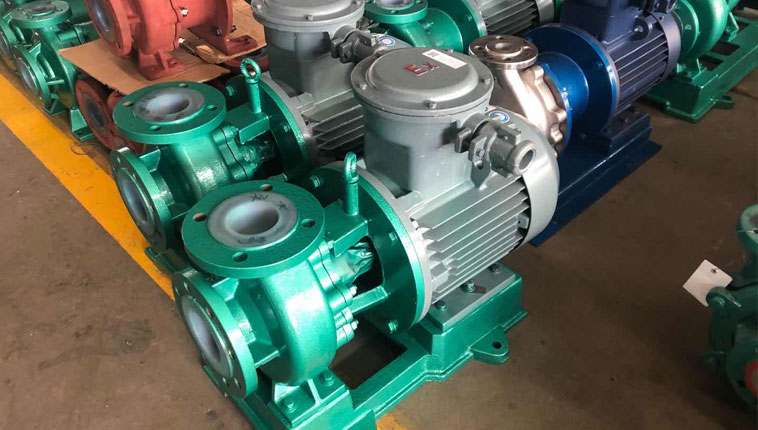
Targeting the three core pain points of plating‑part cleaning wastewater: strong corrosion risk, susceptibility to blockage, highly fluctuating working conditions and high sealing requirements, fluoroplastic magnetic‑drive pumps are perfectly suited for wastewater‑conveying applications in electroplating, PCB and hardware surface‑treatment industries, thanks to dedicated material properties and structural design. Their core advantages are reflected in four aspects:
1. All wetted parts are manufactured from high‑grade fluoroplastics (FEP, PFA), delivering outstanding resistance to acids, alkalis, solvents and heavy‑metal corrosion. They can stably convey various mixed acid‑alkali wastewater with high or low concentrations, heavy‑metal‑complex‑containing wastewater and surfactant‑containing wastewater for long‑term operation, resisting composite erosion from complex water quality. The materials are resistant to aging, embrittlement and rust. The service life of the equipment far exceeds that of stainless‑steel pumps and ordinary plastic pumps, greatly reducing equipment replacement frequency and operation‑maintenance costs.
2. Adopting magnetic‑coupling transmission plus static‑seal isolation‑sleeve structure, the pump chamber is fully sealed. This fundamentally eliminates leakage of plating‑part cleaning wastewater. It prevents equipment and site damage caused by corrosive‑medium leakage, and strictly ensures environmental‑compliance performance during wastewater conveyance, fully meeting stringent environmental‑control requirements of the electroplating industry. Meanwhile, there are no exposed transmission structures to prevent medium volatilization and effectively improve workshop working environment.
3. Equipped with optimized wide‑channel impeller and pump‑chamber structure, it features smooth flow channels and low flow resistance. It achieves good passage performance for fine metal particles, flocculent precipitates and suspended impurities in plating‑part cleaning wastewater, minimizing impurity accumulation and flow‑channel blockage. In addition, magnetic transmission has no mechanical friction, delivering stable operation with low vibration and low noise. Even when wastewater contains trace solids and operating conditions fluctuate, continuous stable conveying can be maintained. It effectively solves problems such as jamming, flow‑rate attenuation and frequent shutdowns, and guarantees 24‑hour continuous stable operation of production lines.
4. Fluoroplastic magnetic‑drive pumps feature compact structure and smooth transmission. They are well‑adapted to intermittent start‑stop and variable‑flow conveying conditions of electroplating production lines, tolerating fluctuations in water flow and water‑quality concentration. Seal failure and component damage will not occur due to frequent start‑stop operations. The equipment has few vulnerable parts, eliminating frequent replacement of seals, bearings and other accessories. Only simple cleaning and maintenance are needed in daily use, resulting in extremely low operation‑maintenance costs. It fits large‑scale production demands of small, medium‑sized and large electroplating, hardware and PCB factories.
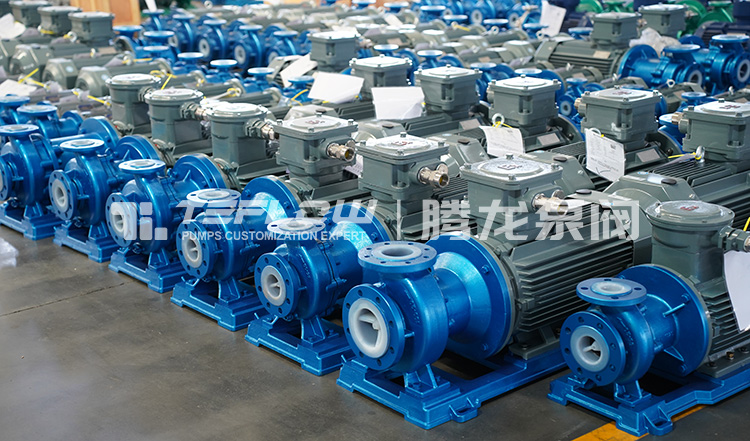
Strong corrosiveness, susceptibility to blockage and highly fluctuating operating conditions of plating‑part cleaning wastewater represent industry pain points that conventional conveying equipment can hardly overcome. They are critical factors affecting stable operation, environmental compliance and production‑cost control of electroplating production lines. Compared with ordinary centrifugal pumps and self‑priming pumps, fluoroplastic magnetic‑drive pumps boast core strengths of corrosion resistance, zero‑leakage performance, anti‑blockage capability and high stability. They precisely match wastewater‑conveying demands of electroplating, PCB and hardware surface‑treatment industries. They can secure production continuity, cut equipment operation‑maintenance costs and strengthen environmental‑safety safeguards. Therefore, they are the preferred essential equipment for conveying plating‑part cleaning wastewater at present.



 +86+0563-5093318
